


Precision Ag Update - April 2026
Managing Yearling Heifers with Virtual Fence on Mountain Riparian Pastures
Written by Tucker Lytton & Sam Wyffels, MSU Department of Animal & Range Sciences, April 2026
Summary
Methods
During the summer of 2025, the first year of a two-year grazing study utilizing 80 yearling Angus based heifers was conducted by the DelCurto-Wyffels Grazing Nutrition lab within the Department of Animal & Range Sciences at Montana State University. The study aimed to investigate the efficacy of the implementation of two different grazing management strategies (rotational & season-long grazing) with the use of virtual fence (VF) for herd and pasture management. The study site was located northeast of Bozeman, MT in the Bridger Mountain Range on a riparian pasture system bordering the banks of Brackett Creek. To record the efficacy of these grazing strategies forage samples as well as heifer performance metrics were recorded throughout the duration of the grazing season. Forage samples, taken weekly (n=744), were analyzed for crude protein (CP) content as well as fiber content. Heifer body weights (BW) (n=240) and body condition scores (BCS) (n=240), along with hair cortisol samples from the tail switch (n=240) were recorded at initiation, midpoint and conclusion of the study. These heifer performance metrics were analyzed using statistical models to determine effects of the differing grazing strategies. Along with forage and heifer performance metrics all 80 individuals on this study were fitted with Halter VF collars. These collars recorded GPS location on 3-minute intervals as well as activity and behavioral metrics compiled into 3-minute summaries. GPS data collected from collars also provided grazing density heat maps throughout the duration of the study.
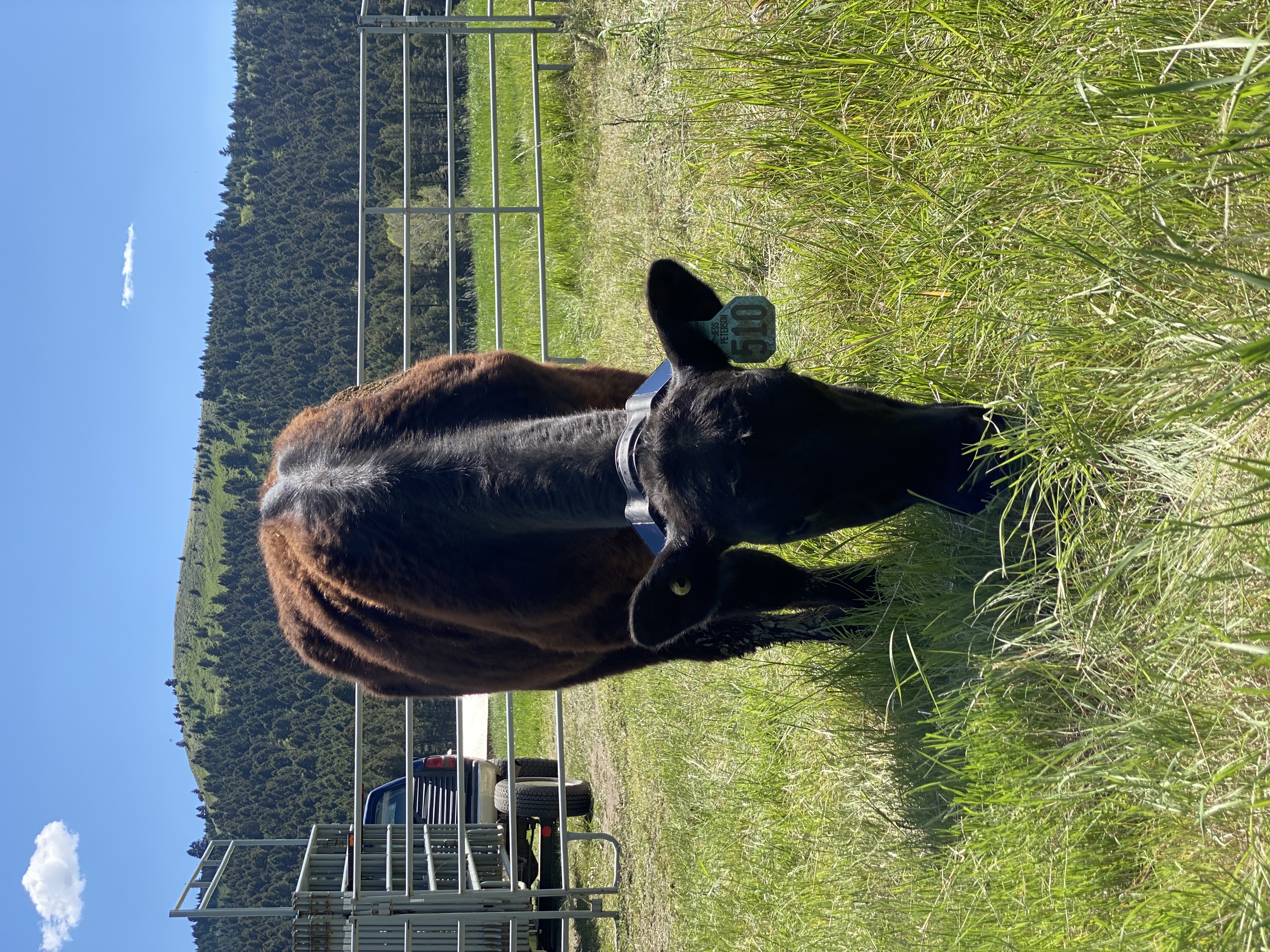
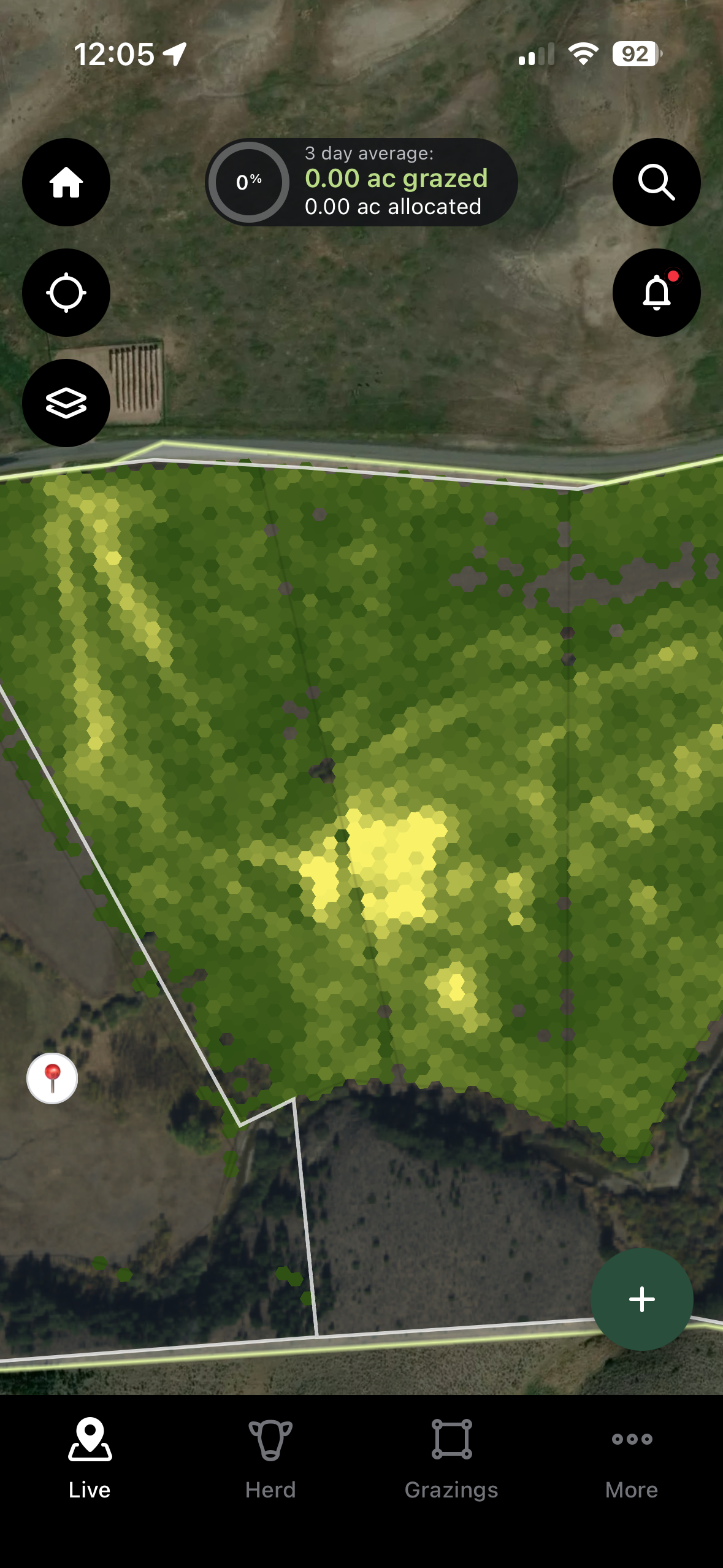
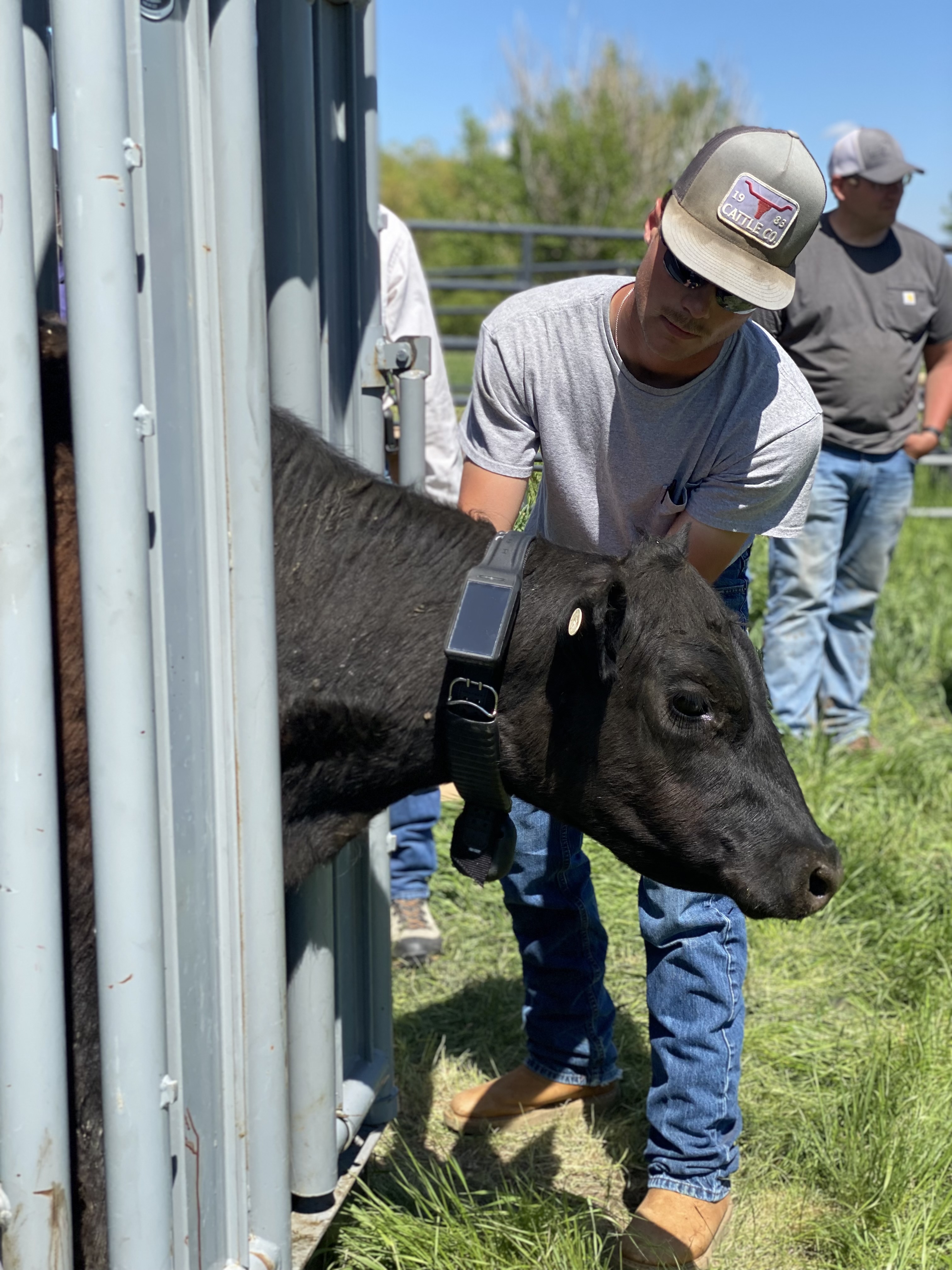
Figure 1: Heifer grazing with Halter collar at initiation of study (Left). Grazing distribution heat map generated by Halter virtual fencing application (Center). Assembly of Halter virtual fencing collars (Right).
Study Layout
To implement virtual fencing in a way that demonstrated its applicability and efficacy in this scenario we utilized an ~220-acre mountain riparian pasture that was perimeter fenced and split roughly in half by permanent fencing. Each half of this pasture was then assigned both treatments of this grazing study, a rotational grazed and season-long grazed paddock arranged adjacently to one another (see Fig. 2). The grazing treatments themselves were separated by only the use of VF. The VF system was then used to rotate the rotationally managed herd through a series of 6 paddocks. In the season-long managed herd, VF was used simply to keep the heifers separate from the other herd as well as to provide a “water gap” location on the creek that paralleled the study site.
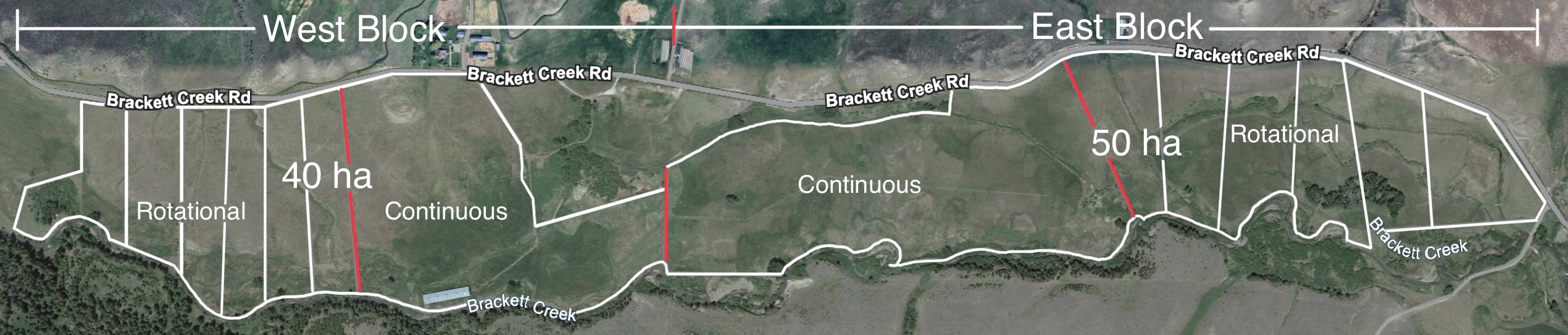
Figure 2: Pasture layout at Brackett Creek study site.
What We Observed
Within the first year of this study, we observed changes in both forage resources as well as heifer performance. Forage quality followed a general declination pattern over the grazing season; crude protein decreased as fiber content increased. However, this decrease in forage quality was not as severe in the season-long grazing treatment compared the rotationally grazed treatment. Heifer performance was shown to increase over the grazing season with increased in total weight gain as well as positive change in BCS. Similarly to forage quality these gains were improved in the season-long treatment when compared to the rotational treatment. Further analysis of GPS and behavioral data along with hair cortisol will aid in the refinement of these preliminary results and conclusions generated from this VF grazing study.
Implications
- Virtual fence has the capability and practicality to be a viable tool for beef cattle grazing management.
- Type of grazing management strategy will influence the production of forage resources as well as impact the over performance of beef cattle.
Get Connected & Learn More
Tucker L. Lytton
M.S. Student

Sam Wyffels, Ph.D.
Assistant Professor,
Beef Extension Specialist