


Precision Ag Update - December 2025
Strategies for Precision Herbicide Application During Summer Fallow
Written by: Devanshi Het Desai and Tim Seipel, December 2025
Summary
Summer fallow is a common practice in Montana; 2.7 million acres were managed as fallow in 2019 (NASS, 2022). Weed management in no-till fallow is based on repeated broadcast applictions of non-selective herbicides. In the field, weeds are spatially clustered or in patches and don’t cover the whole field. If POST-emergent herbicide is used, it is wasted if it isn’t applied to a weed but lands on bare soil. Targeted herbicide applications have the potential to reduce this overuse, but the strategies to be used are just being explored.
Technologies such as WeedSeeker®, WeedIT™, and GreenEye™ apply herbicide only where green vegetation is detected. Studies across the Northern Great Plains have reported herbicide savings up to 20-86% using these technologies. Targeted herbicide applications in fallow, combined with traditional broadcast methods, could reduce herbicide use while maintaining or potentially improving efficacy without requiring excessive field trips.
What we tested
In the summer of 2024 and 2025, we used a customized spray system to test precision application strategies at SARC (Southern Ag Research Center). The systems had a set of nozzles for normal broadcast applications and a second boom with light-activated sensors controlling the nozzles (Weedseeker) for target application (Figure 1). The system has the capacity to run both the booms together, and this application is called Double-boom, where 30% herbicide of the labeled rate was applied through the broadcast boom, and 70% herbicide of the normal rate was applied when weeds were detected by the Weedseeker through the other boom (Figure 1).
We tested combinations of methods, including traditional broadcast, targeted Weedseekerapplications, customized doubleboom, and their combinations. We did two passes during the fallow season at the beginning of the season and 45 days after the first application. We used a tank mix of Glyphosate (32 fl oz per a-1) + Dicamba (16 fl oz per a-1) for the first application, and Glyphosate (32 fl oz a-1) + Carfentrazone (2 fl oz a-1) in subsequent applications, targeting weeds at the 4-inch size.
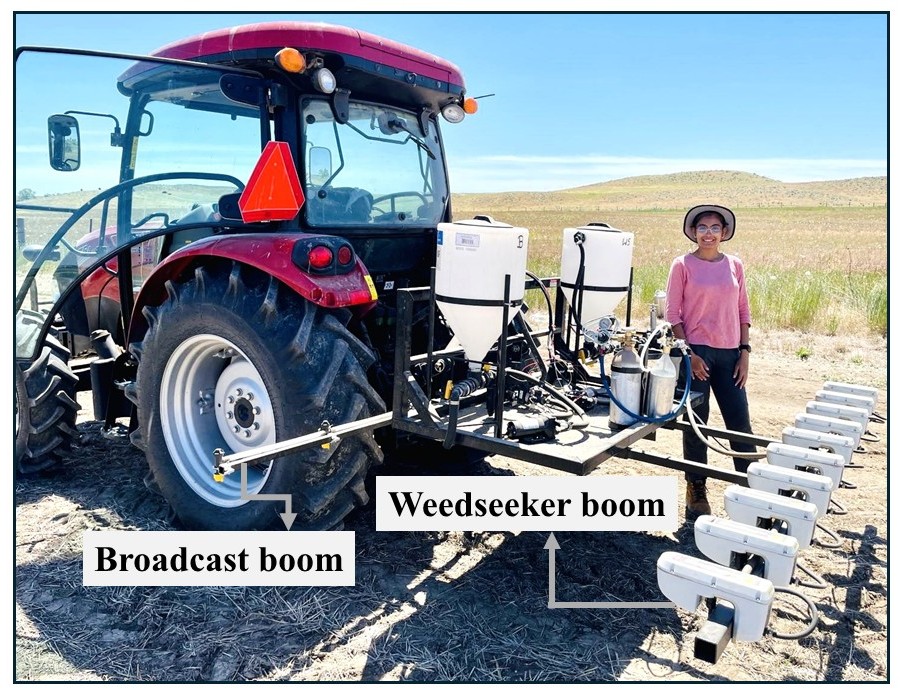
Figure 1. Customized sprayer with broadcast and WeedSeeker boom.
Key Findings
- The best strategy varied among years. Weed numbers and biomass in the plots varied among years and strategies because of field and weather conditions. The best weed control was achieved with the weedseeker treatment in 2024 and with doubleboom in 2025.
- Herbicide use correlated with weed cover. In 2024 and 2025, herbicide usage varied within the season in the weedseeker treatments. The broadcast and the weedseeker used nearly the same amount of herbicide during the first fallow application due to nearly 100% weed cover (volunteer wheat; see Figure 2), which meant sensors were being constantly activated. Later in the season, we reduced herbicide use in the weedseeker treatments compared with broadcast because weed cover was lower before application (Figure 2).
- Targeted spraying had more late-season weeds in 2025. 50 days after the second application, the weedseeker treatment had the most weeds that had emerged. This could be due to smaller weeds present at the second application that were not detected by weedseeker, or to late-emerging species because of precipitation (Figure 3). The doubleboom treatment had fewer weeds than the weedseeker because 30% of the labeled herbicide dose was broadcast, suppressing the smaller weeds present during the second application (Figure 4).
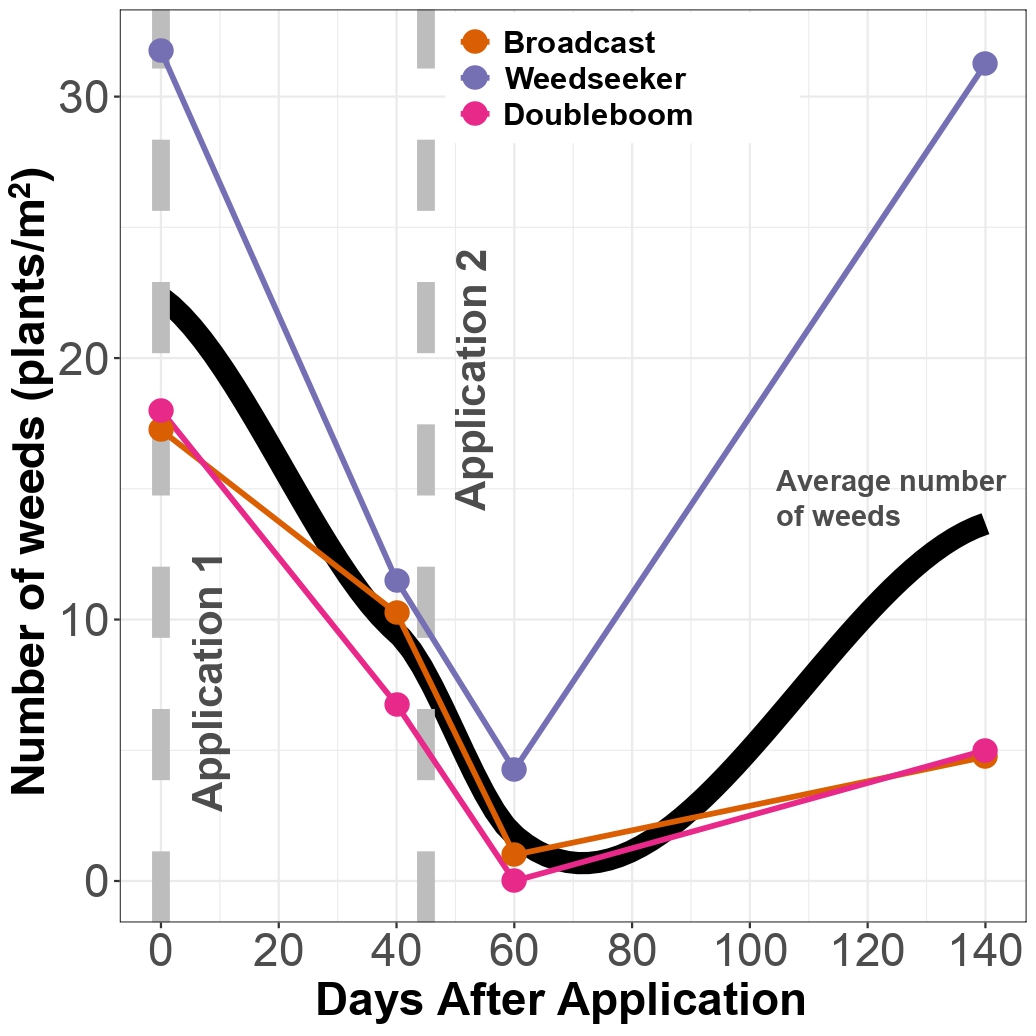
Figure 2. The number of weeds throughout the season and in response to different treatments.
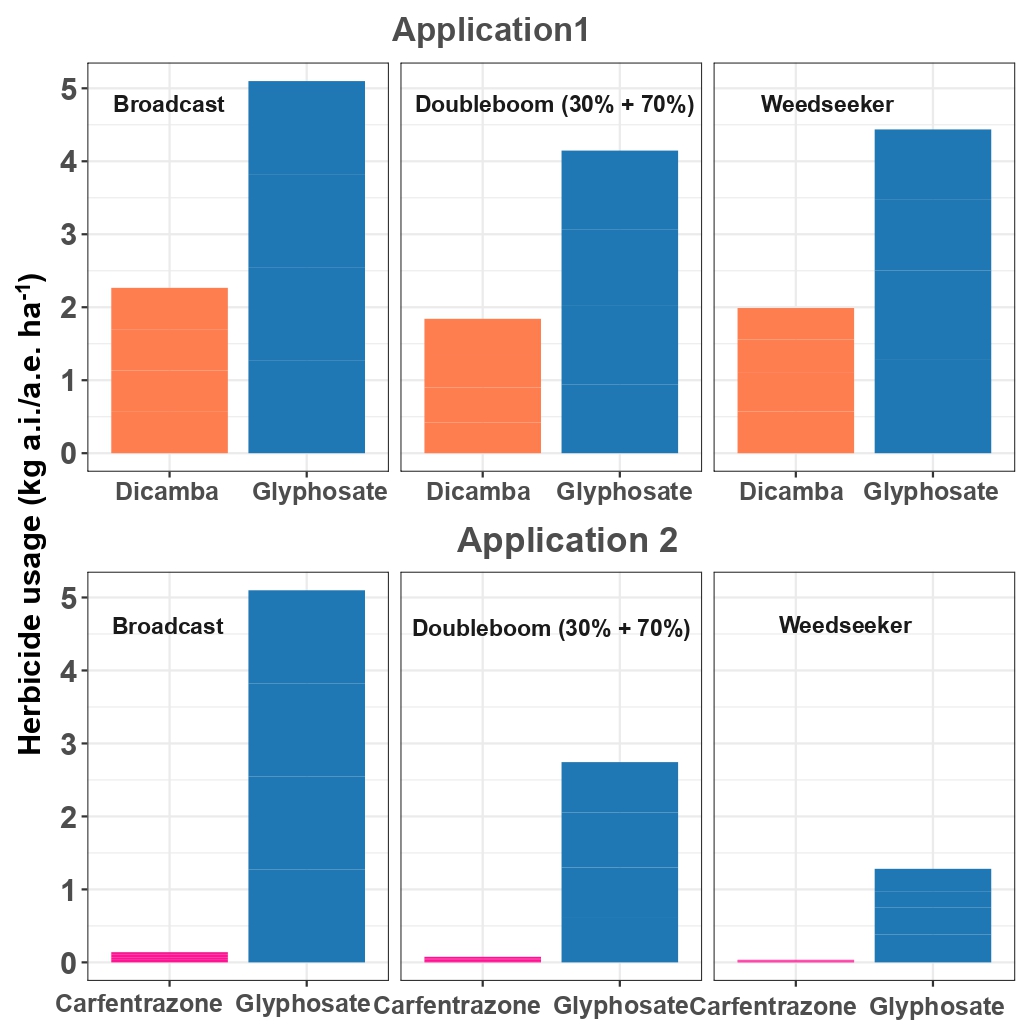
Figure 3. The amount of herbicide used in different treatments during the first application (top), and the second application (bottom)
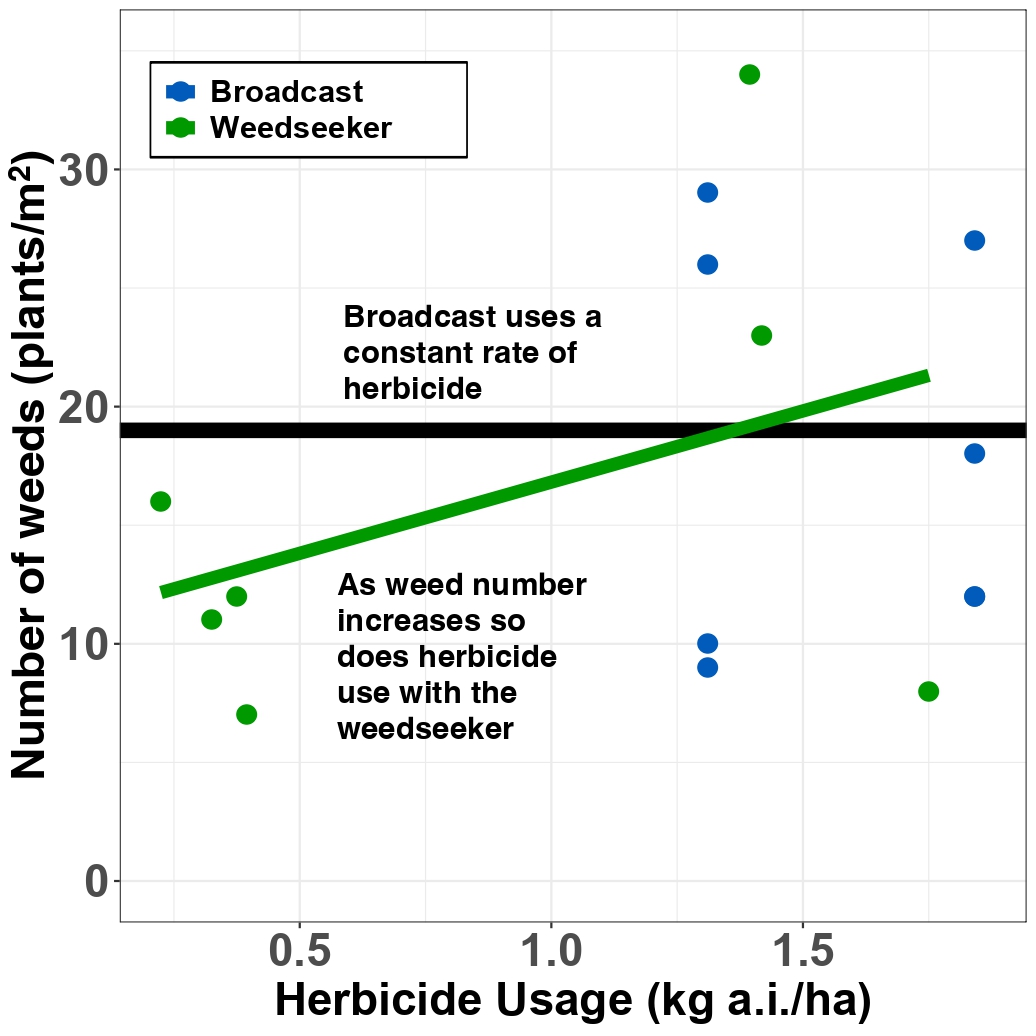
Figure 4. The relationship between herbicide useage and the different treatments.
Key Takeaways
Integrating targeted herbicide applications with traditional broadcast methods provided effective weed control with reduced herbicide use compared to broadcast applications alone. But in years with a lot of volunteer crop or late emerging weeds broadcast applications are as efficient, especially when a residual herbicide is included reducing the need for repeated passes over the field.
Acknowledgment
We would like to acknowledge the Southern Agricultural Research Center for providing the facilities and support essential to this project, and the Montana Wheat and Barley Committee for funding this research. And to our collaborators Paul Nugent, Lovreet Shergill, and Het Desai.
Get Connected & Learn More

Devanshi Het Desai
MSU Graduate Research Assistant

Dr. Tim Seipel
Assistant Professor
(406) 994-4783
timothy.seipel@montana.edu