


Precision Ag Update - July 2026
Machine Learning–Driven Detection of Potato Virus Y (PVY) in Seed Potato Systems Using UAV Imagery
Written by: Muhammad Shehzore Hashmi, Bradley Whitaker and Paul Nugent, July 2026
Summary
Precision agriculture technologies are increasingly being used to improve crop monitoring and disease management across large production systems. In seed potato production, Potato Virus Y (PVY) remains a major challenge, as even small levels of infection can lead to rejected seed lots and significant economic losses. Current detection methods rely on manual field scouting and laboratory testing, which are accurate but difficult to scale across entire fields. To address this challenge, we developed and evaluated a machine learning-based approach using drone imagery to detect PVY symptoms at the individual-plant level. By combining UAV (Unmanned Aerial Vehicle) based RGB (Red, Green, Blue) imagery with modern computer vision techniques, this work explores a scalable and practical solution for early disease detection in seed potato systems.
Methods
During the 2025 growing season, high-resolution RGB imagery was collected using UAV platforms over commercial seed potato trials at Washington State University (WSU) and research plots at Montana State University (MSU). These sites represent typical field conditions, including variability in plant density, canopy structure, and environmental conditions encountered in seed potato production systems.
Images captured multiple crop rows and included both healthy plants and those showing PVY-related symptoms. To prepare the data for analysis, individual plants were labeled into two categories: clean (healthy) and PVY-positive (infected). Because UAV images cover large areas, each image was subdivided into smaller 512 × 512 pixel sections to better capture plant-level detail and improve model performance. AI-assisted image segmentation tools were used to support the annotation process, helping improve consistency and reduce the time required for labeling large datasets. The final dataset consisted of 658 image tiles, representing realistic field conditions where healthy plants significantly outnumber infected ones. A machine learning model was then trained to identify and outline individual plants and detect PVY symptoms within each image.
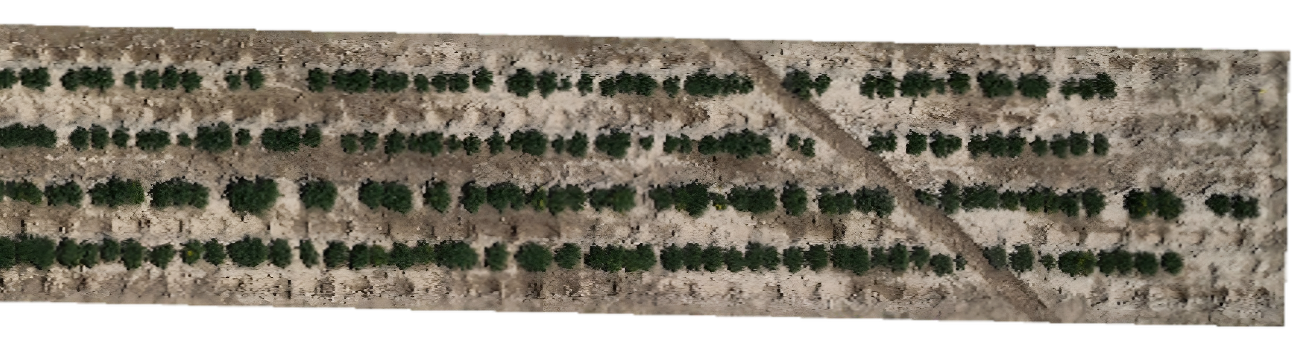
Figure 1. UAV-acquired RGB imagery of a seed potato field showing typical field conditions and plant-level detail.
Table 1. Overview of the UAV image dataset used to train and evaluate the PVY detection model.
| Parameter | Value |
| Study Sites | WSU (commercial), MSU (research) |
| Total Images (tiled) | 658 |
| Classes | Clean, PVY-positive |
| Tile Size | 512 × 512 pixels |
| Data Split | Training / Validation / Test |
What We Observed
The trained model demonstrated the ability to detect PVY symptoms using RGB imagery alone, achieving balanced performance between identifying infected plants and limiting false detections. The model achieved an overall detection accuracy of approximately 64%, with a less than 1% false detection rate. Detection performance varied depending on symptom visibility. Thissuggest that while it is not suited for individual plant diagnosis, it is suited for disease assessment within a population. Allowing for assessment of the population disease rates at the 1-acre or larger scale where the population increases to 20,000 plants or more.
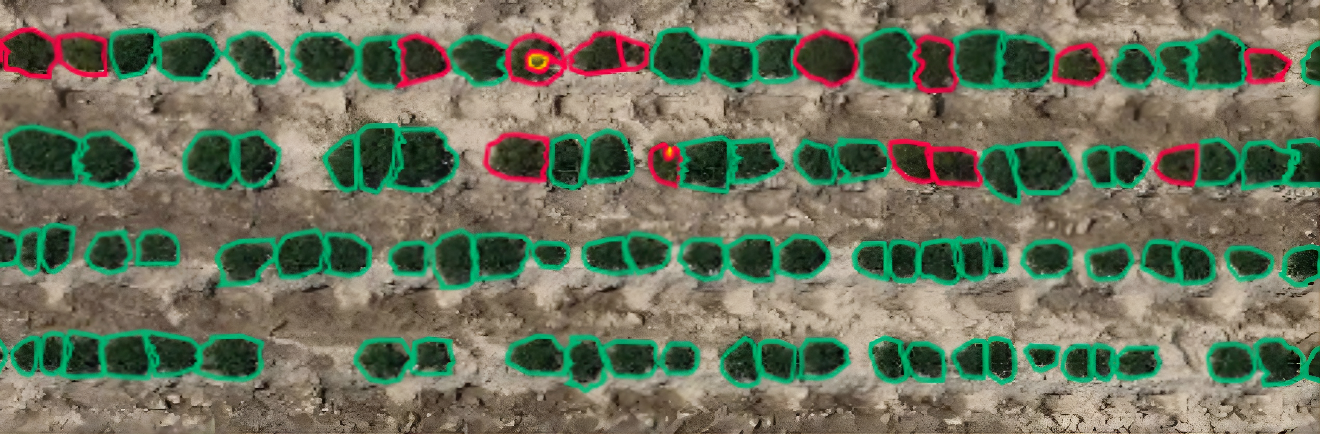
Figure 2. Polygon-based annotations used for model training, distinguishing healthy (clean) and PVY-infected (pvy_positive) plants.
The model outputs provide spatially explicit information, showing not only whether disease is present but also where infected plants are located within the field. This level of detail is important for precision agriculture applications, where management decisions can be made at the plant level rather than across entire plots.
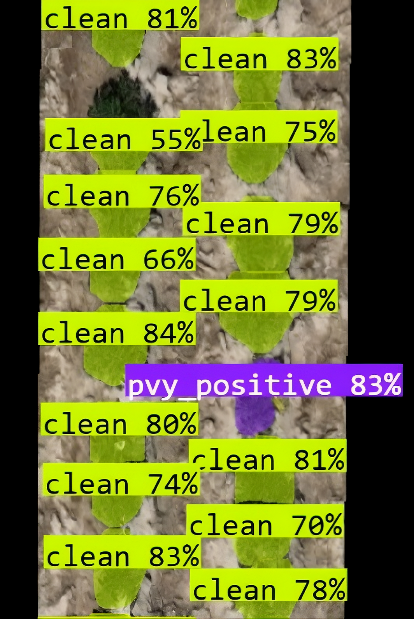
Figure 3. Example model output showing detection of healthy and PVY-infected plants with confidence scores.
Implications
This work demonstrates the potential of UAV-based machine learning systems to support large-scale disease monitoring in seed potato production. By enabling detection of PVY at the plant level, this approach can reduce reliance on manual scouting and provide earlier insight into disease presence across entire fields.
At the field scale, this method can help estimate disease prevalence and support targeted management decisions, such as selective removal of infected plants or focused scouting efforts. While additional improvements are needed for applications requiring extremely low detection thresholds, such as strict seed certification, the results highlight the value of combining drone imagery with machine learning for practical precision agriculture applications.
Acknowledgements
We acknowledge the contributions of Montana State University and Washington State University research teams for supporting data collection and field trials. We also thank the Precision Agriculture Program for supporting applied research in agricultural sensing and analytics.
Get Connected & Learn More

Muhammad Shehzore Hashmi
PhD Student and Graduate Researcher
muhammadshehz.hashmi@montana.edu

Dr. Bradley Whitaker
Associate Professor,
Machine Learning, Modeling Imbalanced Datasets