


Understanding and Managing Ascochyta Blight Disease in Chickpea Production Systems
Overview
Chickpea (Cicer arietinum) ranks third in pulse crop production worldwide. Currently, Montana is the top producer of chickpea accounting for 35% of production in the United States. Ascochyta blight (AB) caused by the pathogen Ascochyta rabiei, is a disease of chickpea that can cause significant losses and is a threat in all production areas. The ability of A. rabiei to overwinter and produce primary inoculum results in recurring seasonal epidemics that increase in severity over multiple seasons. However, the biology of the pathogen remains poorly understood, hindering the precise timing of early fungicide applications and leaving farmers dependent on less effective generalized disease management practices. Because of the large number of fungicide applications needed, AB is the primary limiting factor to farmers integrating chickpeas into their rotations. Researchers are investigating how overwintering structures of A. rabiei develop in different climates, the conditions for initial inoculum release, and how to best optimize fungicide applications.
Ascochyta Blight Symptoms on Chickpea Plant
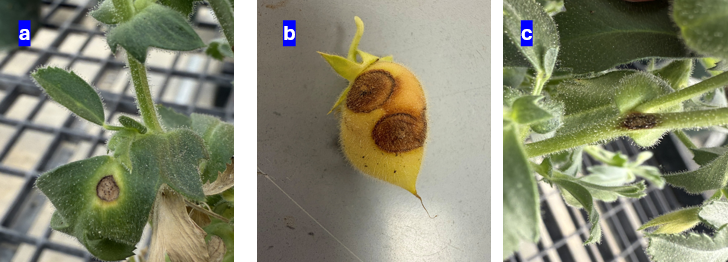
Ascochyta blight symptoms on chickpea a) leaf, b) pod, and c) stem
Disease Cycle of Ascochyta rabiei causal organism of Ascochyta Blight disease
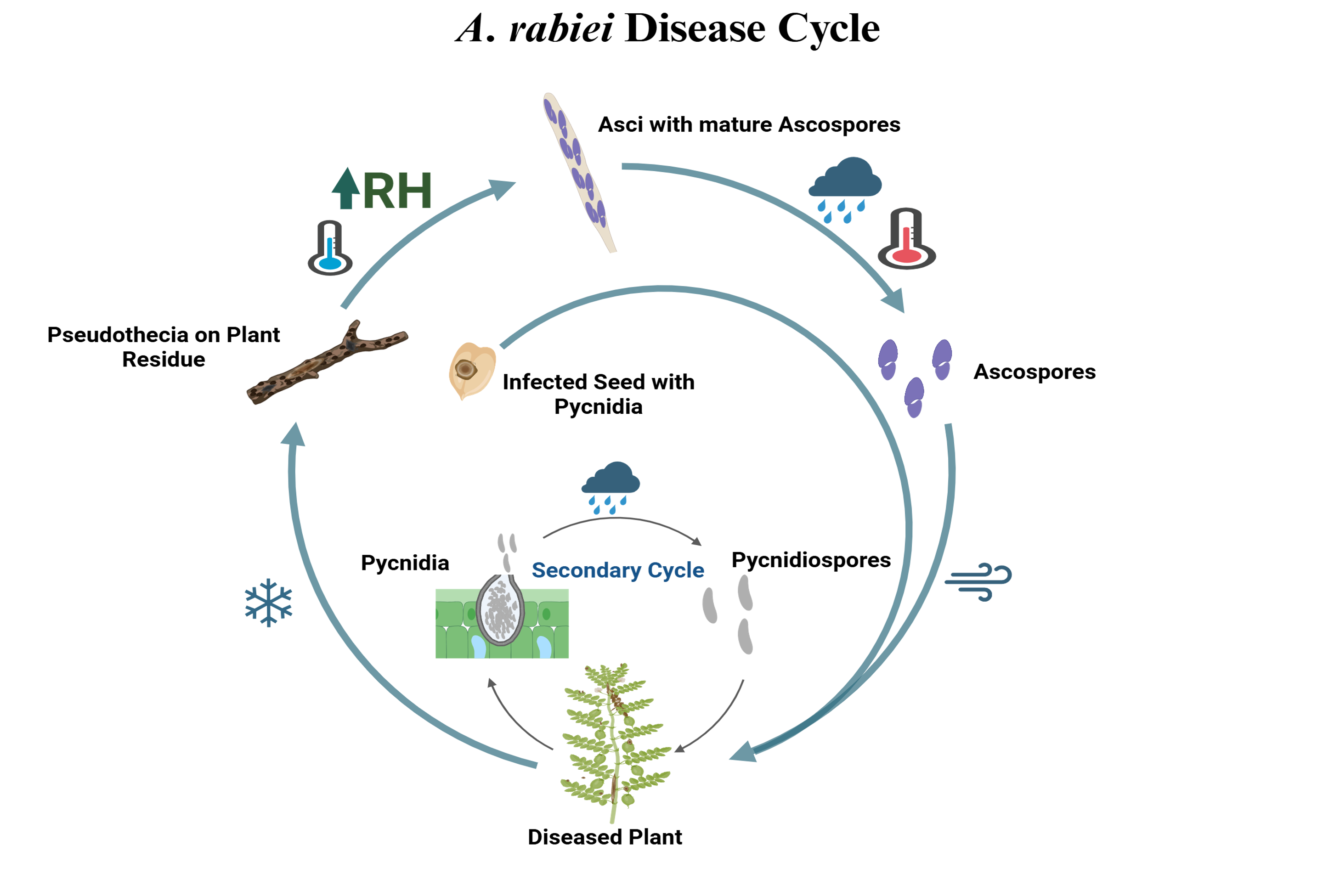
The disease cycle of Ascochyta rabiei is a complex process driven by environmental conditions and the pathogen’s ability to survive harsh winters. It begins when the pathogen overwinters on infected chickpea residue or seeds. Under cool temperatures and high humidity, sexual reproduction occurs on infected crop debris, leading to the development sexual fruiting structure (pseudothecia) and also asexual fruiting structure (pycnida). Once mature, pseudothecia release wind‑borne ascospores that can travel several miles to reach healthy chickpea crops. After the pathogen becomes established on healthy plants, pycnidia are produced within lesions; these pycnidia contain asexual conidia (pycinidiospores) that are dispersed primarily by rain splashes, driving a rapid secondary infection cycle within the field. Together, these modes of survival and dispersal enable the pathogen to persist through winter and spread aggressively during the growing season.