


Precision Ag Update - February 2026
From Space to Pasture: Mapping Forage and Grazing Behavior with Virtual Fencing Technology
Written by: Paige Browning, Hannah Speer and Ricardo Pinto, February 2026
Summary
Precision Ag management in livestock systems has the potential to advance the work of producers by using satellite imagery and virtual fencing to improve grazing management practices, monitor forage utilization, and evaluate cattle behavior. To observe how these management practices can best be utilized, researchers from the Northern Agricultural Research Center (NARC) implemented an experiment where they developed and validated a prediction model that could predict canopy height in rangeland pastures, while also analyzing grazing metrics to determine grazing efficiency at the individual-animal level.
Methods
Over the Summer of 2025, the Precision Agriculture and Animal Science research teams at NARC came together to integrate virtual fence (VF) technology and remote sensing technologies. The team utilized the virtual fence technology, Halter®, along with two sources of satellite imagery: a combination of Sentinel-1 and Sentinel-2, and PlanetScope. High resolution drone imagery was also collected on experiment pastures. These images, which were collected at the beginning of the study, were used to test a prediction model developed to estimate canopy height on rangeland. Biomass (n = 59) and canopy height (n = 600) samples were collected on the pasture used for grazing and an adjacent pasture of similar plant species composition to validate this model (Figure 1). The data collected from the VF collars was used to observe the grazing behavior and grazing intensity of 46 crossbred Angus heifers as they cycled through a 155-acre pasture divided into 5 breaks, each ranging from 30 to 35 acres, over a 45-day period.
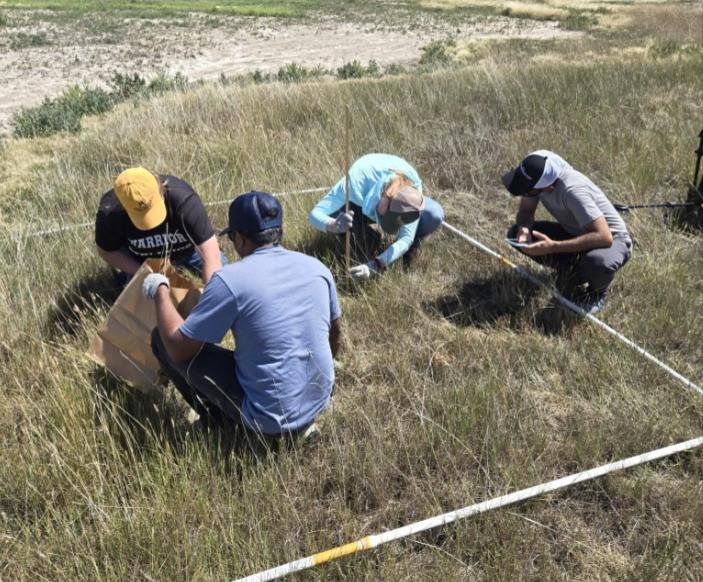
Figure 1: NARC research teams collect biomass samples and canopy heights.
What We Observed
Grazing Behavior
Through the GPS location data obtained from VF collars on the heifers, we were able to observe grazing patterns within the herd. Grazing activity was identified using a proprietary grazing behavior model developed by Halter®, which is not yet commercially available. This allowed us to determine preferred grazing times throughout the day, when the animals went to water, and where grazing was most intense throughout the pasture. Comparing that with the satellite images, we were able to see that cattle chose to graze in areas predicted by the canopy height model to have higher forage availability.
Additionally, using a clustering algorithm, we were able to group animals with similar behavioral and performance metrics such as grazing hours, non-grazing hours, percentage of time grazing, number of unique locations visited, and total distance travelled. With this information, our algorithm grouped animals in 4 different clusters (Figure 2).
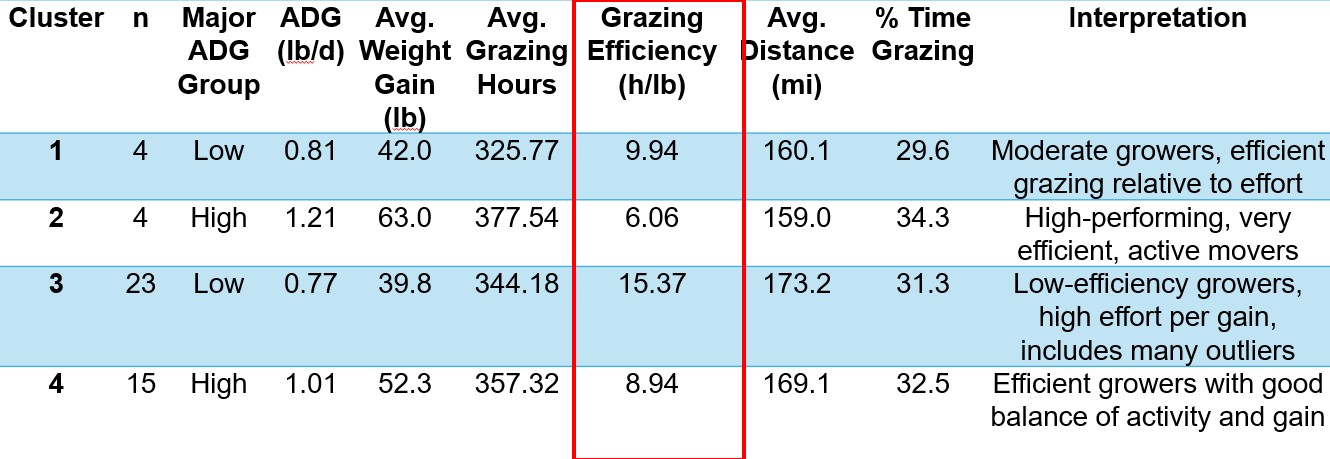
Figure 2: Project animals are clustered into 4 groups based on grazing efficiency and other performance metrics.
By identifying these cluster groups, producers using precision livestock management could employ targeted interventions such as nutritional supplementation or selective breeding based on grazing efficiency.
Remote Sensing
Three canopy height prediction models were created using different remote sensing approaches (Figure 3):
- Drone-based modeling: high resolution
- Sentinel-1 and Sentinel-2 satellite imagery combined: 10-meter resolution, free program
- PlanetScope satellite imagery: 3-meter resolution, paid program
It was found that the Sentinel prediction model was the most effective for predicting canopy heights. This model was validated by collecting multiple ground truth samples and found to be 72% accurate. Imagery from sources such as PlanetScope and drones that have higher resolution tended to overestimate canopy heights, thus making it difficult to predict where forage is truly abundant.
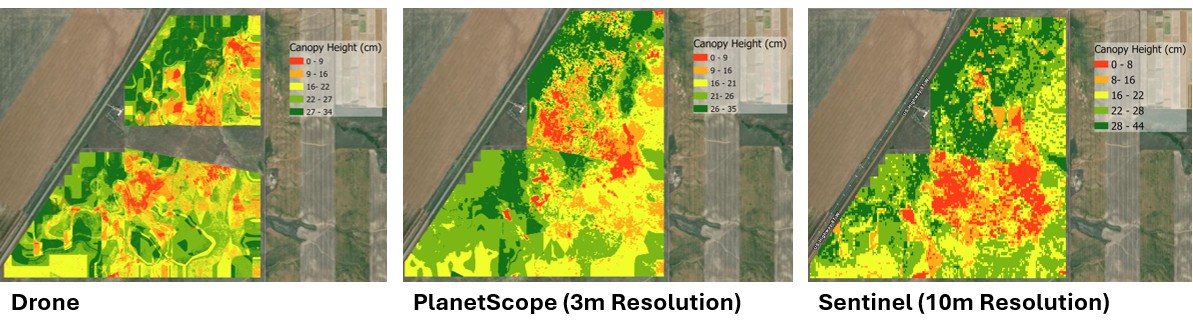
Figure 3: A side-by-side comparison of the three canopy height prediction models.
Implications
- Satellite imagery can be utilized to predict canopy heights in rangelands.
- Virtual fencing has potential to identify individual variability and be used to highlight efficient grazers within cattle herds.
Acknowledgements
We would like to thank the Northern Agricultural Research Center, their cattle crew, and all the faculty and staff involved in this research project. Additionally, we would like to thank the team at Halter for not only guiding us through the addition of new technology to our research station, but for showing up and demonstrating the products to us in person. Thank you for your feedback and willingness to expand Halter into the great state of Montana!
Funding
This work was funded by Montana Ag Experiment Station
Get Connected & Learn More
Paige Browing, MS
Research Associate

Hannah Speer, Ph.D.
Assistant Professor, Animal Science